
China should bid for the 2035 Rugby World Cup
THE 2019 Rugby World Cup (RWC) in Japan was possibly the best edition of the tournament to date. The championship was brought to Asia for the first time, laying the foundations for Asia to host the tournament in the future.
But that window of opportunity is shutting fast, and China is letting it slip away.
The 2019 RWC was a refreshing divergence from the usual hosts such as France, the UK, Australia, and New Zealand. Japan provided fans with a brand-new backdrop and injected its culture and world-famous hospitality into the sport.
However, rugby fans weren’t the only people who benefitted. Air traffic across Asia hit record highs and tickets for the tournament hit a 99 per cent sell-out rate for the very first time. Domestic broadcast records were broken and social media coverage hit over two billion.
Japan’s GDP was boosted by US$2.8 billion, prompting tech giant Sony to partner with the Japan Rugby Football Union in 2022 to continue promoting Japan’s national and domestic teams.
For years, rugby has been steadily growing in lesser-established nations across Asia, largely thanks to the Asia Rugby Championship, the Hong Kong Sevens tournament, and the success of Japan’s national team. And the 2019 RWC was the first to truly shift the sport’s long-overdue expansion into gear.
However, World Rugby has failed to capitalise on the momentum and it is missing a huge opportunity. France hosted this year’s edition and Australia and the US are set to follow in 2027 and 2031.
But as Japan showed, hosting the RWC in an Asian nation can provide unparalleled economic benefits and global exposure. And with World Rugby searching for a host for 2035, I’m urging China to submit a bid.
Some might question whether a RWC outside Japan would be worthwhile, given the lack of a rugby culture throughout the rest of the continent. But critics questioned the merit of hosting the 2008 Olympics or the 2022 Winter Olympics – and China hasn’t looked back since.
China significantly lacks a diversity of sports events, and rugby could address this problem. The repetition of events like the Asian Games are becoming too predictable to excite local fans and lack the global stars to entice international audiences.
Having worked on eight stadiums for the 2022 Fifa World Cup in Qatar, I’ve seen first-hand how a successful event can galvanise new audiences into following a sport and lay the foundations for future events. Just look at Qatar’s Middle Eastern neighbour, Saudi Arabia, which is now gearing up to bid for the 2034 edition.
The Fifa World Cup kick-started a chain reaction in the region that has pushed it up the global pecking order. Just think back to 10 years ago: who would have thought the Middle East would ever become a sports superpower? Now, the region is taking over the reins of football, golf, Formula 1, and even boxing.
Unfortunately, Japan’s neighbours haven’t grasped their opportunity with the same gusto.
But the Rugby World Cup presents the opportunity to change that narrative.
China has huge potential to become a rugby powerhouse. Rugby already ranks as the third most popular participatory sport in Hong Kong thanks to the influence of the annual Hong Kong Sevens – widely considered the most prestigious Rugby Sevens tournament – not to mention the Bledisloe Cup, Super Rugby, and Lions Tour the city has previously hosted.
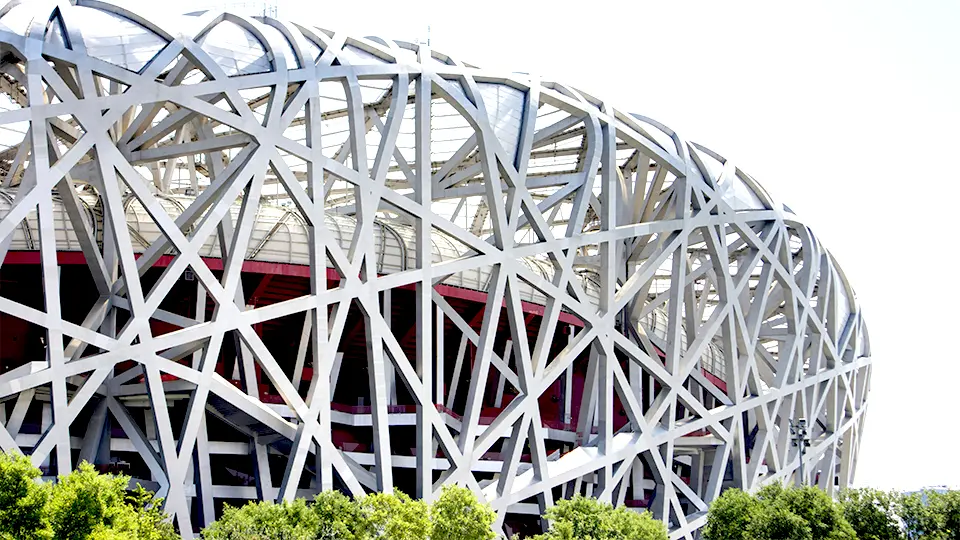
It’s now time to grow the sport in major cities like Beijing, Shanghai, Tianjin, and Guangzhou. And the sheer scale of China’s established infrastructure makes it more than capable of doing so. The final could be held in Beijing National Stadium, and the semi-finals in Hong Kong Stadium – a natural choice given rugby’s popularity in the city.
China’s 50-plus high-capacity stadiums could easily be repurposed into suitable rugby arenas. Its world-leading sporting facilities negate the need to invest in purpose-built training fields. And the influx of fans and teams isn’t exactly going to put a strain on the transport infrastructure of a country of 1.4 billion people.
China has previously expressed an interest in hosting the Fifa World Cup – the second-largest event in the world. But early signs suggest Saudi Arabia are frontrunners, which will give the Middle East another chance to capitalise on a globally popular sports event.
So why not host the world’s third most popular event?
For World Rugby, the ambition should be to encourage as many nations to host the RWC as possible to truly promote and grow the game worldwide. For China, the ambition should be to capitalise on Japan’s success and help wrestle back the influence it has on global sports.
The writer is a global executive specialising in delivering stadiums and sports infrastructure. He is best known for his work at the 2018 Fifa World Cup in Russia and the 2022 Fifa World Cup in Qatar.